

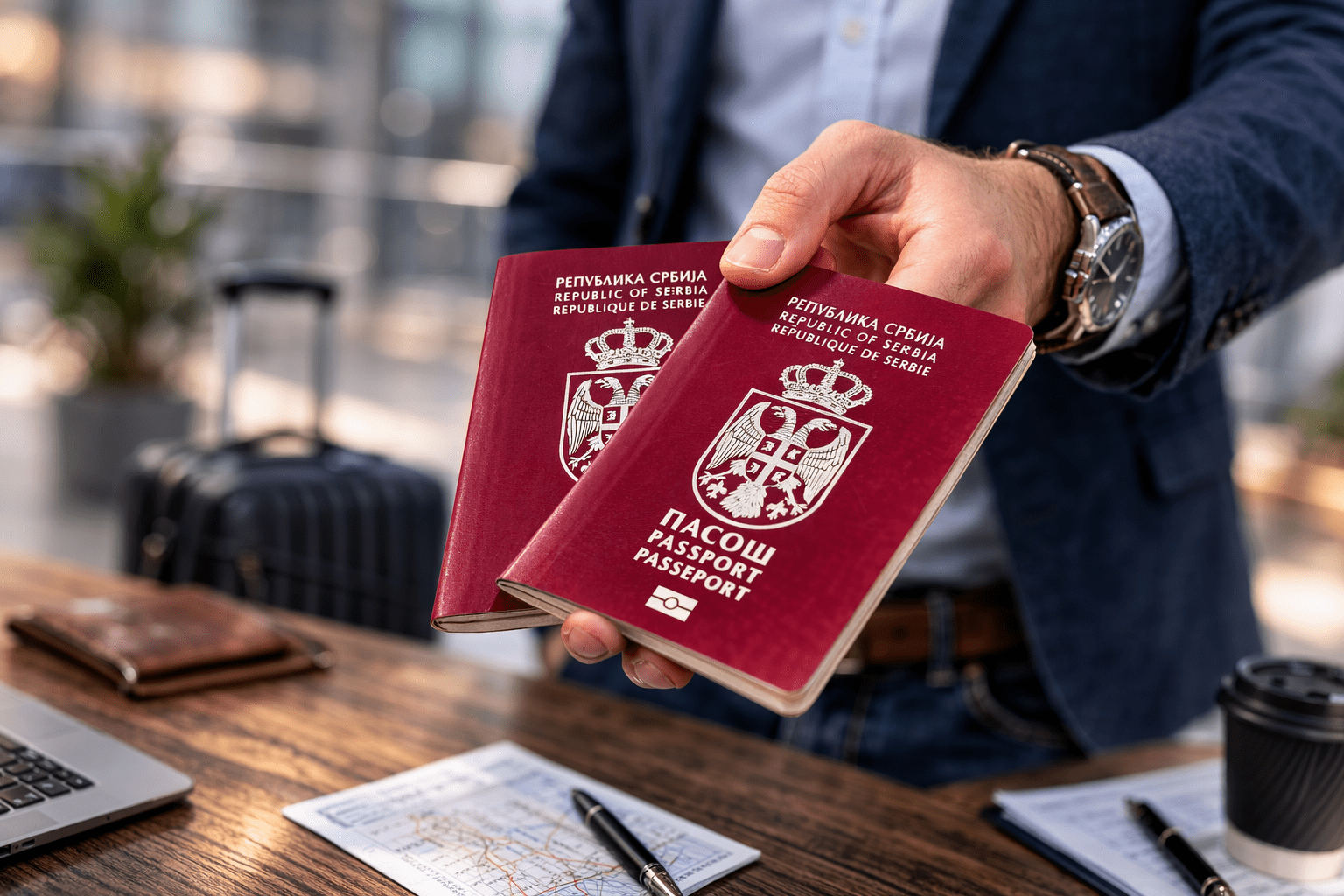
Many people interested in Serbia ask the same question: Is it possible to obtain a Serbian passport without living in Serbia?
The answer depends on how Serbian citizenship law works.
A Serbian passport cannot be issued independently.
It is issued only after a person becomes a citizen of the Republic of Serbia.
However, Serbian law provides several legal pathways to citizenship. Some require long-term residence in the country. Others do not.
Understanding these distinctions is essential before considering any application.
Serbian Passport vs Serbian Citizenship
Before discussing residency requirements, it is important to understand the relationship between a passport and citizenship.
A Serbian passport is not granted as a standalone document. It is issued only to individuals who already hold Serbian citizenship.
In other words, the key legal question is not how to obtain a passport, but rather:
How can someone obtain Serbian citizenship?
Once citizenship is granted, a passport may be issued through standard administrative procedures.
For readers interested in the broader advantages of Serbian nationality, see:
/why-serbia-is-a-strong-choice-for-citizenship-and-passport-in-2025/
Standard Pathway: Citizenship Through Residence
The most common route to Serbian citizenship is naturalization based on residence.
In general terms, this pathway requires:
-
legal residence in Serbia for several years
-
integration into Serbian society
-
fulfillment of administrative and legal conditions.
For individuals planning to relocate permanently, this route can be appropriate.
However, this pathway requires living in Serbia for a significant period of time.
For individuals exploring global mobility options, Serbia is also often discussed among European alternatives in analyses such as:
/best-second-passport-2026-fast-european-citizenship-without-residency/
Citizenship Without Residence: Exceptional Legal Mechanisms
Serbian law also provides a discretionary legal mechanism that allows the Government of Serbia to grant citizenship outside the standard naturalization framework.
This mechanism is commonly referred to as Citizenship by Exception.
Under Article 19 of the Law on Citizenship of the Republic of Serbia, the Government may admit a foreign national to Serbian citizenship when their admission is considered to be in the national interest of the Republic of Serbia.
Unlike standard naturalization, this mechanism does not necessarily require prior residence in Serbia.
Each application is assessed individually, taking into account the applicant’s personal profile, professional background, and the broader context of the case.
A more detailed explanation of this legal framework can be found here:
/serbian-citizenship-by-exception-a-unique-european-opportunity/
How Citizenship by Exception Works in Practice
Citizenship by Exception is not a standardized immigration program.
Instead, it is a discretionary legal mechanism involving several stages of institutional review.
Authorities typically consider factors such as:
-
the applicant’s professional credibility
-
jurisdictional background
-
personal and professional profile
-
the broader relevance of the applicant’s admission to Serbia.
Because each case is assessed individually, preparing a well-structured legal application is essential.
For a detailed explanation of the legal steps and procedural stages involved, see:
/how-to-get-serbian-citizenship-by-exception/
Because of the discretionary nature of the process, proper legal structuring and representation are essential.
A detailed explanation of how attorney-led representation works in Citizenship by Exception cases can be found here:
https://statt.rs/practices/serbian-citizenship-by-exception/
Legal Assessment Before Considering Any Application
Before exploring any citizenship pathway that does not involve residence, it is important to understand that Serbian citizenship by exception is not an automatic or program-based process.
Each case requires individual legal assessment.
This assessment typically examines:
-
the applicant’s background and professional profile
-
the jurisdictional context
-
the potential legal basis for exceptional admission to citizenship.
Only after such an assessment can it be determined whether pursuing this type of application is appropriate.
This preliminary evaluation helps avoid unrealistic expectations and ensures that any application submitted to the competent authorities is legally grounded and properly structured.
Who Typically Explores Citizenship Without Residence?
In practice, individuals who explore these possibilities often include:
-
international entrepreneurs
-
investors with business interests in the region
-
professionals with global mobility needs
-
individuals with existing personal or professional connections to Serbia.
Each situation is unique.
Eligibility depends on the specific legal and factual circumstances of the applicant’s case.
After Citizenship Is Granted
Once citizenship is granted through any legal pathway, the issuance of a Serbian passport becomes an administrative procedure.
This usually involves:
-
identity verification
-
biometric registration
-
submission of the passport application to the competent authority.
At this stage, the process is procedural rather than discretionary.
Understanding the Serbian Citizenship Framework
Serbia’s legal framework differs from many countries offering formal “citizenship by investment” programs.
Serbia does not operate a formalized citizenship-for-investment scheme.
Instead, Serbian citizenship law provides several distinct legal pathways, including:
-
citizenship by descent
-
naturalization through residence
-
discretionary admission in exceptional cases.
Understanding these distinctions helps applicants avoid common misconceptions and ensures that decisions are based on accurate legal information rather than marketing narratives.
Conclusion
Obtaining a Serbian passport without living in Serbia is not a separate legal process.
It is simply the result of how Serbian citizenship is acquired.
While most citizenship pathways involve residence, Serbian law also allows for exceptional admission to citizenship in specific circumstances, following a discretionary legal and institutional assessment.
For individuals exploring these possibilities, understanding the legal framework is the first step toward determining whether such a pathway may exist.
Frequently Asked Questions
Can a foreigner obtain a Serbian passport without living in Serbia?
A foreigner cannot obtain a Serbian passport on its own. First, the person must obtain Serbian citizenship.
In most cases, people obtain citizenship after living in Serbia for a certain period. However, Serbian law also allows the Government to grant citizenship in exceptional circumstances, when the admission of a person serves the national interest.
You can read more about this legal mechanism here:
/serbian-citizenship-by-exception-a-unique-european-opportunity/
Is Serbia a citizenship-by-investment country?
No. Serbia does not operate a citizenship-by-investment program.
Instead, Serbian law allows people to obtain citizenship through several legal pathways. These include citizenship by descent, naturalization after residence, and — in certain cases — discretionary admission by the Government under Article 19 of the Law on Citizenship.
How long does it take to obtain Serbian citizenship?
The timeline depends on the legal pathway used.
For example, naturalization based on residence usually requires several years of lawful residence in Serbia. By contrast, exceptional admission follows a different institutional procedure. In those cases, authorities review each application individually.
Can someone obtain Serbian citizenship through ancestry?
Yes. Many people obtain Serbian citizenship through descent.
This pathway is common among members of the Serbian diaspora. However, eligibility depends on the available documentation and the legal connection to Serbian ancestors.
Why do people seek Serbian citizenship?
Many international entrepreneurs, investors, and professionals show increasing interest in Serbian citizenship.
Several factors explain this interest. Serbia offers a strategic geographic position, a growing economy, and increasing international mobility opportunities.
You can read more about these advantages here:
/why-serbia-is-a-strong-choice-for-citizenship-and-passport-in-2025/